Showing posts with label nolan lee. Show all posts
Showing posts with label nolan lee. Show all posts
Thursday, August 26, 2010
InMenlo's article
InMenlo just recently asked to do a feature on my art. Linda and Chris who run InMenlo came over to my studio to see the art and meet with Brooke and I. They were absolutely incredible and it was a joy to get to know them. Check out the article here: http://inmenlo.com/2010/08/26/nolan-lee-artist-with-a-penchant-for-justice/

Monday, August 23, 2010
Just wrapping up the justice wall


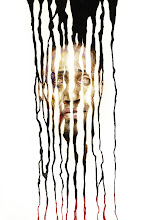
I've been working on an absolutely amazing project, what makes it amazing is the cause, not my art. I have been commissioned create an mural and installation on a large wall that is all about justice. 'The justice wall' is the moniker we've given it and it is located at Open Door Church San Mateo . The wall is an exploration of injustice and redemption. I'm just wrapping up the finishing details today on the wall but I thought I'd post some pictures of some of the process. I took the newspaper burnings I have been working on scanned them and printed them out much larger to emphasize their effect. I then installed them on the wall to look as ashes falling from the burnt images. The second half of the wall is the redemptive side showing faces in flowing multi-colored liquid. I'll post the finished pics soon ut I hope you enjoy. My art is mean to serve so I hope that it may serve you.
Saturday, May 15, 2010


Saturday, April 24, 2010


Wednesday, December 16, 2009
more pics burned paper
 My amazing wife took these pictures and she is a photographer so I thought I'd post some better quality pics for you to see. I really like the backround, which was her idea, it adds more to the pictures.


Thursday, December 10, 2009
Strange fruit piece done!
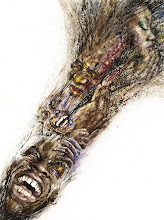
Below are the lyrics from the song "Strange Fruit" followed by artworks I created inspired from the song. The first piece was the first of a new series I started in November 2009. The series consists of freehand burned images into newspaper articles. Each piece is created by slightly burning newspaper until it browns certain areas to reveal an image.
The subject of "Strange Fruit" is based on an anti-lynching poem by Abel Meeropol that was later adapted into a famous song, "Strange Fruit" by Billie Holiday. One of the stanzas in the song reads, "strange fruit hanging from the poplar trees," which is meant to represent the lynchings that had been occurring in America throughout the 20th century. Knowing and understanding the injustice behind the civil rights murders haunted me enough to create a visual depiction of these specific lynchings.
My pieces is a visual representation of the oppressed. If you look at the top image, first, you will notice that the overall shape of the piece is similar to that of an oddly shaped fruit hanging from above by chains and a noose. Second, you may notice that I burned these images into an article from the New York Times about abolitionist John Brown. Third, you may find faces within the burning which are meant to depict the agony of injustice, as a way to remember the atrocities that occurred. And lastly, amidst the burning you will find the face of the victim, Mack Charles Parker, who was lynched in 1959 without anyone ever being arrested for his murder.
Southern trees bear strange fruit
Blood on the leaves
Blood at the root
Black bodies swinging in the southern breeze
Strange fruit hanging from the poplar trees
Pastoral scene of the gallant south
The bulging eyes and the twisted mouth
The scent of magnolia sweet and fresh
Then the sudden smell of burning flesh
Here is a fruit for the crows to pluck
for the rain to gather
for the wind to suck
for the sun to rot
for the tree to drop
Here is a strange and bitter crop
Blood on the leaves
Blood at the root
Black bodies swinging in the southern breeze
Strange fruit hanging from the poplar trees
Pastoral scene of the gallant south
The bulging eyes and the twisted mouth
The scent of magnolia sweet and fresh
Then the sudden smell of burning flesh
Here is a fruit for the crows to pluck
for the rain to gather
for the wind to suck
for the sun to rot
for the tree to drop
Here is a strange and bitter crop


Wednesday, December 9, 2009
Burned Paper
I have just started a new series of works that ties into the civil rights theme in a lot of my work. This new series is based off of lynchings in the US. These images were created by burning pieces of newspaper, no paint or anything added just burnt paper. I know that these works I've done are very fragile and might not last long but I think it is the exact aesthetic for the pain and injustices that have occurred. I also think that the fragile nature represents the fact that this history is hard to face and is easier to ignore letting it crumble away into the forgotten. Lynchings have occurred as recent as July 24, 1981 Michael Donald was lynched and June 15, 2000 Raynard Johnson was lynched. These images are the first of many works to come in this style and on this subject.


Monday, October 5, 2009
Intermountain Youth Councils
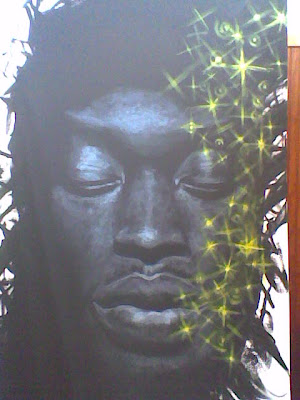
Here are some pics I took with my phone of two of four paintings I did for the Intermountain Youth Councils Salvation Army this weekend. I did each painting 4 ft x 8 ft in about two hours, all that practicing speed painting paid off. It was another amazing expirience with the Salvation Army.

Tuesday, September 29, 2009
cardboard speed paintings


I did these paintings to practice for my upcoming onstage painting for the Salvation Army. I didn't have any money for canvases so I painted these on some used cardboard. I painted each in an hour, trying to learn to paint better faster. Each one is probably 3 ft tall x 2 ft wide. I know these pics aren't the best I took them with my cell phone camera but as you can tell I'm trying to get away from perfectionism and just go for it!
Sunday, April 26, 2009
pics from Salvation Army Southwest youth councils
Here are some pictures of the onstage painting I did over the weekend for the Southwest Youth Councils in Glorietta New Mexico. The people my wife and I met were instant friends and the kids attending were incredible! It made for an awesome weekend and fun painting experience.


Monday, December 15, 2008
back from the madness
I just back from Orlando and Atlanta and it was awesome, did so much stretching and painting the canvas my knuckles are bloody and my hands are healing from blisters, spent the night in the Atlanta airport with a bunch of homeless people and ate dinner with one of them at about 3am. I sold 2 paintings of 3 at Learn Promote Defend and might still sell another before Christmas. I don't have any pictures of the Orlando mural but I think I will soon.
Sunday, August 31, 2008
Unsolved Civil Rights Murder Cases (Interpretive Paintings) Series
The following paintings are interpretive of actual unsolved civil rights era murder cases in which no one was ever brought to justice. The paintings are visual aids to the pain and suffering of the victims from these actual murder cases. The paintings were created to raise awareness and to pursue justice for these cold cases all these years later. This is a very important part of American history that is not talked about enough. In order to move forward combatting racism we must bring justice for those whom our justice system failed. Please read each case file before looking at the painting.
The Johnnie Mae Chappell Case
On the evening of March 23, 1964, MRS. JOHNNIE MAE CHAPPELL, mother of ten, had just been grocery shopping for her family at a local store. Upon arriving home, she discovered that her wallet was missing. Accompanied by two neighbors, Mrs. Chappell retraced her steps to a local highway to look for her wallet.

As the riots flared in downtown Jacksonville, four young white men were drinking beer and discussing the racial “troubles” when they allegedly decided “to find themselves a nigger to shoot.” As they drove down the highway, they noticed a small group of black people walking along the side of the road. The car slowed down and one of the men cold-bloodedly fired his rifle from the window. Johnnie Mae Chappell was struck and killed by a single gunshot from the passing car.
After a flawed investigation by local officials, J.W. Rich (the shooter), Elmer Kato, Wayne Chessman and James Davis were indicted on First Degree Murder charges for the death of Mrs. Chappell. Only J.W. Rich went to trial where he was subsequently convicted on the lesser charge of Manslaughter. The other men walked free, even though one of them had confessed his involvement in the crime to a local detective.
On April 27, 2004, forty years after the crime, Governor Jeb Bush asked the Florida Department of Law Enforcement to reopen the Johnnie Mae Chappell case in hopes of having first degree murder charges reinstated on the three un-indicted murder suspects. These men are now in their late 60’s and still live in Jacksonville.
Moore’s Ford Case
On July 25, 1946, four young African Americans -- George & Mae Murray Dorsey and Roger & Dorothy Malcom were shot hundreds of times by 12 to 15 unmasked white men in broad daylight at the Moore's Ford Bridge spanning the Apalachee River, 60 miles east of Atlanta, Georgia. These killings, for which no one was ever prosecuted, enraged President Harry Truman and led to historic changes but were quickly forgotten in Oconee and Walton Counties where they occurred. No one was ever brought to justice for the crime.
Rev. George W. Lee Case
On May 7, 1955, The Rev. George Lee, a minister who also ran a local grocery and printing press in Belzoni, was preaching about voting rights in black Baptist churches more than a decade before the height of the civil rights movement. Lee and a friend started a local chapter of the NAACP and convinced nearly 100 black people to register to vote before resistance began turning violent. Lee was driving home one day when he was hit with gunfire from a passing car. Without investigating, the Humphreys County sheriff claimed that Lee's death was a traffic accident. Asked about the lead pellets taken from Lee's face and head, the sheriff replied they were probably dental fillings. The coroner ruled the death resulted from "unknown causes." No one was ever arrested in the case
Willie Edward’s Case
 Recently hired to drive trucks for Winn-Dixie, Willie Edwards left the afternoon of January 23, 1957, never to return home. Three months passed before his body washed up on the shores of the Alabama River. Officials stated that decomposition made it impossible to determine the cause of death.
In 1976, then State Attorney General Bill Baxley re-opened the Edwards case. Four people were arrested and charged with Edward's murder: Sonny Kyle Livingston Jr., 38, Henry Alexander, 46, James York, 73 and Raymond Britt (Jr). Britt broke the long silence with his sworn affidavit (in exchange for immunity), dated February 20, 1976. In the statement to Attorney General Bill Baxley, Britt describes how on the night of January 23, 1957, he along with three other men beat and forced Edwards to jump off the Tyler-Goodwin Bridge into the Alabama River.
Alabama Judge Frank Embry dismissed the charges, even with Britt's sworn testimony because no cause of death was ever established. He concluded that "merely forcing a person to jump from a bridge does not naturally and probably lead to the death of such person." Edwards fell 125 feet (27 metres), from the bridge into the Alabama River below.
Case Re-opened: Twenty-one years passed before Malinda Edwards made her plea to Montgomery District Atorney Ellen Brooks for justice in her father's case. Brooks responded by reopening the investigation. In late 1997, State Medical Examiner, Dr. James Lauridson acting on a request from Brooks, exhumed and re-examined Edwards's remains. Based on the re-examination of Edwards' remains using modern technology, Dr. Lauridson ruled the cause of Edwards' death to be homicide.
Brooks filed a motion with the court to have Edwards's death certificate reflect Dr. Lauridson's findings. Judge Charles Price ordered the Alabama Department of Vital Statistics to change Edwards' cause of death from unknown to drowning by homicide.
Dr. Lauridson's ruling and Judge Price's order resolved the legal problem that caused Judge Embry to dismiss the case in 1976. Brooks took the case before the County Grand Jury.
The Grand Jury concluded that Edwards was murdered by the Ku Klux Klan, but didn't feel there was sufficient evidence for new indictments. Brooks, speaking to a column in the Montgomery Advertiser dated March 2, 1999 said that because most of the key witnesses were dead, it was difficult to prosecute the case. Britt recanted his assertions regarding the involvement of Alexander; both Livingston and York were dead at this time (Livingston's wife came forward in 1993 saying her husband confessed to the murder on his deathbed). The Grand Jury refused to return an indictment. Malinda Edwards, who was 5 years old when her father was murdered, remains hopeful that a successful prosecution can be brought to fruition.
Rev. Lamar Smith Case

Aug. 13, 1955, Lamar Smith was a World War II veteran, a farmer and a local leader in the black community in Brookhaven, Mississippi. He organized voter registration drives and even campaigned against an incumbent county supervisor. One August day shortly after an election he was downtown on business when he and some white men got in an argument. A number of witnesses saw one of the white men pull out a .38-caliber pistol and shoot Smith at close range. Three men were arrested but went free when none of the witnesses would testify to what they had seen.
Subscribe to:
Posts (Atom)